Before the storm: the 72-hour pre-season checklist
Hurricane mold is preventable, and most of the prevention happens before the storm. Once a system is in the Gulf, do this:
- Clear gutters, downspouts, and the condensate drain line on your HVAC — the three most common places storm debris creates a backup.
- Photograph your home's interior and exterior for a pre-storm condition baseline. Store the photos off-site (cloud).
- Lower your dehumidifier's setpoint and let it run — you want indoor humidity as low as possible before you lose power, so materials start dry.
- Identify your main water shutoff and your electrical panel. If a pipe ruptures during the storm, you'll need to move fast in the dark.
- Move valuables and absorbent materials (books, rugs, important papers) off the floor and away from exterior walls and windows.
The power-outage humidity spike
Here's the part most homeowners don't anticipate: the mold problem usually isn't the storm water — it's the days after, when the AC is off and indoor humidity climbs from 50% to 85%+ while everything is closed up. Drywall, insulation, and wood absorb that moisture passively. Three days of 85% humidity with no airflow is enough to germinate mold on any surface that has even a trace of dust or cellulose.
If the power is out for more than 24 hours, open windows on opposite sides of the house whenever outdoor humidity drops (often early morning on the Panhandle), and use battery fans to keep air moving. Passive airflow is your best tool when you can't dehumidify.
The single most common post-hurricane mold source we see isn't storm surge — it's a closed-up, powerless house that sat at 85% humidity for four days. Ventilation during the outage matters as much as extraction after.
The first 24 hours after landfall
Once it's safe to assess your property, the order of operations matters for both your home and your insurance claim:
- Safety first. Do not wade into standing water near electrical panels or outlets. If you're unsure, wait for a professional.
- Document before you touch anything. Wide shots of every room, close-ups of the water line on walls, the source of intrusion, and any damaged roofing. Time-stamp everything.
- Extract bulk water immediately. Wet-vac, towels, buckets — anything that gets standing water out in the first few hours.
- Remove wet absorbent materials that can't be saved: saturated carpet padding (the carpet can often be saved, the pad cannot), soaked cardboard, and anything pressed against wet drywall.
- Open wall cavities where water entered. Cut modest inspection holes at the base of wet walls so air can reach the inside of the cavity — trapped moisture is where post-storm mold starts.
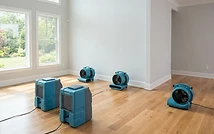
- Set up airflow and dehumidification as soon as power is available. Aim fans across wet surfaces, not into them, and run dehumidifiers continuously until materials reach their dry standard.
Insurance: what to do in the first week
Florida homeowners policies (HO-3 is the most common) generally require you to report water damage promptly and to mitigate further damage — meaning you have a duty to dry and protect the property even before the adjuster arrives. The clause that catches most homeowners is the typical '14-day' or 'similar' limitation on water damage that leads to mold: if you wait weeks to report a slow leak, the resulting mold may be excluded.
Action items in the first week:
- Report the loss to your carrier within 24–48 hours. Get a claim number and the adjuster's name.
- Save every receipt — tarps, fans, wet-vac rental, dehumidifier, hotel. 'Mitigation expenses' are typically reimbursable.
- Do not dispose of damaged materials before the adjuster sees them unless they're a health hazard. Photograph and, where possible, retain samples.
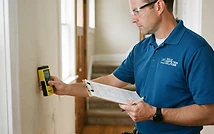
- Request a moisture mapping and drying log from your mitigation contractor. This is the document that proves you mitigated in real time.
- If the adjuster can't come quickly, ask whether they'll accept your contractor's documentation and photos as a preliminary scope.
When to call us
If your home took on more than a few gallons of water, or if any wall cavity, ceiling, or floor was saturated, professional extraction and structural drying within 24 hours is what prevents a Category-1 water loss from becoming a full mold remediation. We dispatch within 60 minutes during storm events, document the loss for your claim, and coordinate directly with your adjuster. During hurricane season, the earlier you call, the more of your home we save.