Why visible mold is usually the tip of the iceberg
Mold grows toward moisture and away from light. By the time a colony is visible on the face of a wall or ceiling, it has almost always been growing on the back side of that same surface — where the moisture source is — for days or weeks longer. A surface wipe of what you can see leaves the source colony intact, and it returns within weeks. That's why a real inspection looks behind surfaces, not at them.
The 7 places we check on every inspection
These are the locations that account for the large majority of hidden mold we find on the Florida Panhandle:
- Behind and under kitchen and bath cabinets. A slow leak at the back of a sink or supply line soaks the drywall behind the cabinet — invisible from the room — for weeks. We pull drawers and use a moisture meter on the cabinet back and the wall behind.
- Inside HVAC ductwork and the condensate pan. A clogged condensate drain backs water into the pan, then into the air handler, where dust plus standing water grows mold that gets blown through every supply vent. Pull a supply register and shine a light inside.
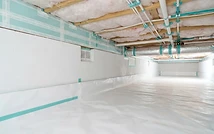
- Crawl spaces and the subfloor above them. On the Panhandle's clay soils, crawl-space humidity above 70% is normal, and it wicks into the subfloor above. We inspect the vapor barrier, the rim joist, and the underside of the subfloor for the dark staining that signals early growth.
- Behind drywall around windows and exterior doors. Wind-driven rain penetrates failed window seals and soaks the drywall inside the wall cavity around the frame — the interior paint often looks fine while the back of the drywall is colonized.
- Attic sheathing and the underside of the roof deck. Poorly vented attics condense humid air at night, soaking the plywood roof deck. A flashlight across the underside of the sheathing reveals the dark speckling of early Aspergillus or Penicillium growth.
- Behind washing machines and refrigerators. The two appliances most likely to leak slowly and invisibly. A failed ice-maker line or a washer supply hose weeps for months behind the unit, soaking the wall and floor behind it.
- Inside wall cavities with plumbing runs. Any wall with a supply or drain line is a candidate — especially exterior walls where cold pipes condense in humid air. We use a thermal camera to find the temperature differential that reveals wet insulation.
The tools that make hidden mold findable
A flashlight and a visual check find maybe a third of hidden mold. The other two-thirds require instruments:
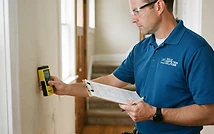
- A non-invasive moisture meter reads moisture content through drywall and tile without cutting — pinpointing wet walls in seconds.
- A thermal camera shows temperature differences across a whole wall at once; wet insulation is colder than dry, showing up as a dark patch on the scan.
- A borescope (a small camera on a flexible probe) lets us look inside a wall cavity through a 1/4-inch inspection hole — finding growth on the back of drywall without demolition.
- Tape-lift and air samples sent to a lab confirm species and spore counts — the difference between 'there's mold' and 'there's Stachybotrys at a level that requires removal.'
If your inspector isn't using at least a moisture meter and a thermal camera, you're getting a visual walk-through, not an inspection. Hidden mold is found with instruments, not eyeballs.
When to get a real inspection
Schedule an instrument-based inspection if you've had any water loss in the last 12 months that wasn't professionally dried, if you smell musty air you can't source, if anyone in the home has unexplained respiratory symptoms, or before you buy any Panhandle home older than 20 years. The inspection is free — and finding a colony while it's still inside one wall is dramatically cheaper than finding it after it's spread through three.