Why crawl spaces are the Panhandle's #1 mold origin
A crawl space is a shallow, unconditioned airspace between the ground and your floor joists. On the Florida Panhandle, the ground beneath it is clay-heavy Santa Rosa soil that holds water for days after a storm, and the airspace above it is fed by humid Gulf air through foundation vents. The result is a microclimate that sits at 70 to 85 percent relative humidity for most of the year — comfortably above the 60 percent mold threshold.
Mold doesn't need standing water in a crawl space. It needs sustained humidity above 60 percent and a cellulose food source — and the underside of your subfloor, the rim joist, and the paper backing of any insulation are all cellulose. Spores germinate on those surfaces passively, fed by nothing but the humidity the space already holds. By the time you smell musty air upstairs, the colony on your subfloor has been growing for weeks.
The three failure modes we see on every inspection
Crawl-space mold almost always traces to one of three structural failures. Identifying which one you have determines the fix:
- No vapor barrier, or a torn one. A 6-mil polyethylene vapor barrier covering 100 percent of the exposed ground is the single most important crawl-space control. Without it, ground moisture evaporates directly into the airspace. We inspect barriers that are torn, partially covering the ground, or missing entirely — and the subfloor above them is almost always colonized.
- Inadequate ventilation. Older crawl spaces rely on passive foundation vents to exchange humid air for equally humid Gulf air. On a 75-degree dew-point July day, opening the vents brings in more moisture than it removes. Modern building science favors sealed, conditioned crawl spaces over vented ones on the Gulf Coast — but most Panhandle homes still have the old vented design.
- Standing water or groundwater intrusion. A high water table, a failed exterior drain, or storm runoff grading toward the foundation can leave liquid water in the crawl space for days. Liquid water plus cellulose plus warmth is not a risk — it is a guarantee. Any standing water in a crawl space is an emergency, not a maintenance item.
If your crawl space has a dirt floor, no vapor barrier, and foundation vents open to July Gulf air, mold is not a possibility — it is already growing. We find it on the first inspection, every time.
The three fixes that actually work
There is a lot of crawl-space theater in the remediation market — fogging, ozone, antimicrobial spraying. None of it works without addressing the moisture source. The fixes that actually prevent recurrence, in order of impact:
- Install or replace the vapor barrier. A 6-mil (or thicker) polyethylene sheet covering 100 percent of the exposed ground, seams overlapped 12 inches and taped, extending 6 inches up the foundation walls. This single intervention cuts crawl-space humidity by 15 to 25 percent and is the foundation every other fix builds on.
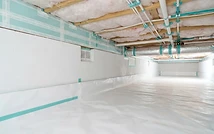
- Encapsulate and condition the space. For homes with persistent moisture, full encapsulation — sealing the vents, lining the walls and floor, and conditioning the space with a dehumidifier or HVAC supply — converts the crawl space from a humid outdoor zone into a dry indoor zone. It is the most expensive fix and the most effective.
- Manage exterior water. Grade soil away from the foundation, extend downspouts at least 6 feet from the house, and ensure gutters are clear. If storm runoff is entering the crawl space, no interior fix will hold — the water has to be redirected before it reaches the foundation.
Why fogging and ozone are not the answer
A common offer for crawl-space mold is a treatment — fog the space with an antimicrobial or run an ozone generator and call it resolved. Here is why that does not work: mold on a subfloor or rim joist has grown into the wood. Fogging and ozone kill surface spores but do not remove the mycelium inside the wood fibers. The colony returns as soon as the treatment dissipates, because the moisture source and the colonized material are both still in place.
Per IICRC S520, crawl-space remediation means removing heavily colonized insulation, HEPA-vacuuming and antimicrobial-treating the structural wood, and — critically — fixing the moisture source before any of it. We remediate the mold and then we fix the crawl space so it does not come back. A treatment without the moisture fix is a warranty on a problem that will return.
When to have your crawl space inspected
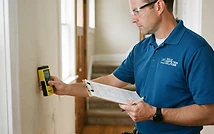
Schedule a crawl-space inspection if you have a musty smell on the first floor, if your floors feel soft or spongy in any area, if anyone in the home has unexplained respiratory symptoms, or if your crawl space has never been professionally inspected. On the Panhandle, an annual crawl-space check is the single most cost-effective mold prevention a homeowner can perform — and the inspection is free.