The 72-hour window
Once a hurricane passes and it is safe to re-enter, you have roughly 72 hours before a Category 1 or 2 water loss becomes a mold remediation project. The first 24 hours are for safety and documentation; the next 48 are for extraction and drying. Every hour after that, the math shifts toward removal. This checklist is what our crews run on every post-storm assessment — it is the difference between saving materials and replacing them.
Exterior: what to check before you go inside
Before entering, walk the exterior. Storm damage that is visible from outside tells you where to look inside — and what to photograph for your insurance claim:
- Roof: missing or lifted shingles, punctures from debris, damaged flashing around vents and chimneys. Water entering through the roof travels down wall cavities and appears as wet spots on ceilings far from the actual entry point.
- Siding and stucco: wind-driven rain can force water behind siding without visible damage. Look for discoloration, swelling, or separation at seams — especially on the windward side of the home.
- Windows and doors: failed sealant, cracked glass, and displaced frames. Wind pressure can break window seals without shattering the glass, creating an intrusion path for rain.
- Ground and grading: has storm runoff pooled against the foundation? Is the soil still graded away from the house, or has it been displaced? Water against the foundation means crawl-space or slab-edge intrusion.
- Photograph everything. Wide shots of each elevation, close-ups of any damage. Time-stamp the photos. This exterior documentation is the foundation of your insurance claim.
Interior: room by room
Inside, work systematically from the top of the house down — water travels down, so ceiling and upper-floor damage appears first:
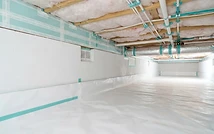
- Attic: check the underside of the roof deck for wet insulation, dark staining on the sheathing, and any daylight visible through the roof. Attic mold after a storm starts at the sheathing and moves down into the living space through ceiling penetrations.
- Ceilings: look for water staining, bubbling paint, or soft spots — especially below roof penetrations, plumbing vents, and chimneys. A wet ceiling that is sagging needs immediate attention; it can fail.
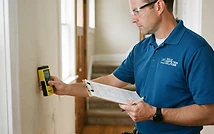
- Walls: run your hand along exterior walls, especially at the base. Cool, damp, or soft drywall at the base of an exterior wall is a sign of water inside the cavity. Discoloration or bubbling paint means the drywall is already wet behind.
- Floors: warped, cupped, or buckled flooring means water has gotten beneath. Laminate and engineered wood that is cupping at the seams has water underneath — the flooring may be salvageable if extracted and dried within 48 hours.
- Under and behind cabinets: the most commonly missed intrusion point. Water traveling along a wall often ends up behind base cabinets, where it soaks the drywall and cabinet backs invisibly. Open cabinets and check the floor inside and the wall behind.
- HVAC: check the condensate pan and drain line — storm debris commonly clogs the exterior drain exit, backing water into the air handler. Run the system and check the vent smell; a musty smell means the coil or ductwork got wet.
The most common post-storm mistake is checking only the rooms where water was visibly standing. Water travels through wall cavities and along floor joists — the room that looks dry may be the one with water inside the walls. Check every exterior wall, not just the wet ones.
What to document for your insurance claim
Your insurance claim lives or dies on the documentation from the first 48 hours. Before you start removing anything, capture:
- Time-stamped photos of every affected room, including wide shots and close-ups of the water line, damaged materials, and the source of intrusion.
- The water category: was it clean rainwater (Category 1), gray water from an appliance (Category 2), or contaminated storm surge and sewage (Category 3)? The category affects both coverage and remediation scope.
- A room-by-room written description of what was wet, how wet, and for how long. This narrative plus the photos is what your adjuster uses to scope the loss.
- Receipts for any mitigation expenses — tarps, fans, dehumidifiers, wet-vac rental, hotel. These are typically reimbursable under your duty-to-mitigate clause.
When to call for professional extraction
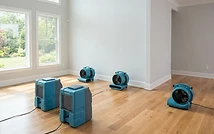
If more than a few gallons of water entered the home, if any wall cavity or ceiling was saturated, or if the power was out for more than 24 hours (meaning humidity spiked while everything was closed up), professional extraction and structural drying within 24 hours is what prevents a water loss from becoming a mold remediation. We dispatch within 60 minutes after a storm, bring truck-mounted extraction and LGR dehumidifiers, document the loss for your claim, and coordinate directly with your adjuster. In hurricane season, the first 24 hours are the whole job.